Enter your email address below.
4 min read...
2020 was a year of ups and downs, closing and reopening, adapting and optimizing. It was a year that changed the hospitality industry forever, and this is clearly reflected in the changes within hospitality businesses. Digitalization has been embraced, and this trend will only continue to grow. Onesix created an analysis of the opportunities based on over 10,000 transactions.
In March 2020, the hospitality world changed. The coronavirus spread through our country at a rapid pace and forced most hospitality businesses to close their doors immediately in compliance with the measures. For most sectors, the measures had direct consequences, particularly for the hospitality industry. The KHN estimates that approximately 700 million per month is being lost due to the measures.
Especially smaller hospitality businesses had to start thinking about using digitalization to continue serving their guests. Virtually every business made strides in digitalization and the way orders had to be delivered or picked up. One of the few remaining opportunities to still generate revenue.
Before the corona crisis, there was not enough focus on the digitalization of orders and their processing. Everything still ran in a relatively old-fashioned way: a staff member asked for the customer’s order, the order was delivered, and payment was made afterwards. This could cost a lot of time for both you as a hospitality entrepreneur and the customer. This results in, among other things, long queues, which cause up to 45% in additional staff costs. According to Stijn Welsing, co-owner of Pieperz.
This corona crisis has revealed that there are enormous opportunities for entrepreneurs who look at digital possibilities in their hospitality, fast food, or retail business. Especially small businesses operating in the fast-food and quick-service market are exposed to digitalization opportunities in their operations. Great examples of this are (online) ordering systems, online POS systems, and digital menus using QR codes.
Data analysis drives growth
Through digitalization such as QR codes and ordering kiosks, it is also possible to gain insight into the data from all orders. For example, you can see which products are the best sellers in your range, but also which products need to be highlighted more to generate additional revenue. This can be viewed by the number of products sold or the revenue share of a product.
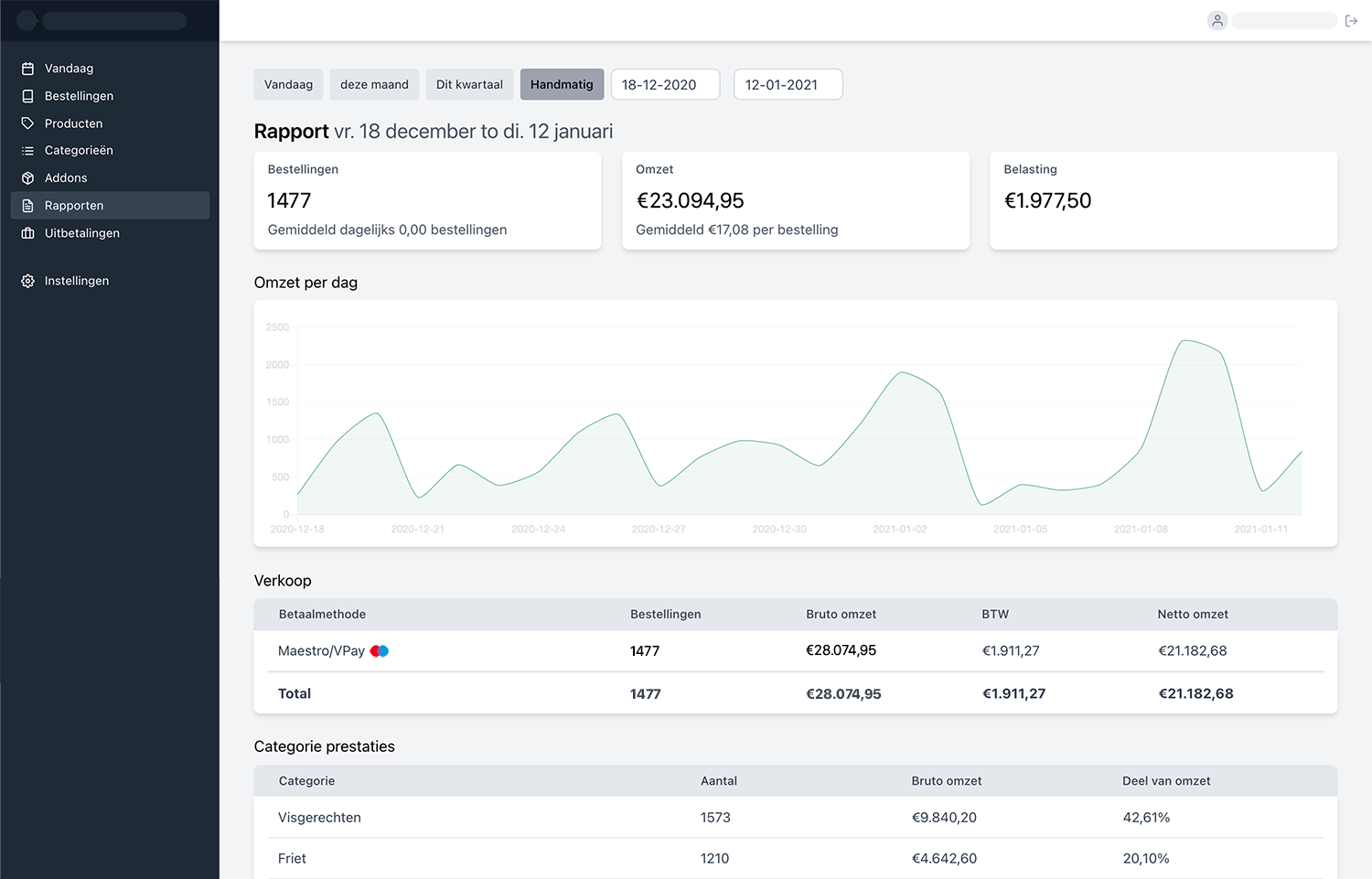
The insight into orders can also reveal entirely different data: average receipt value, what time of day has the highest order value, average order value relative to the cash register, which product combinations work best, and so on. Without an automated ordering system, this data could already be obtained, but it can be very time-consuming. As a hospitality entrepreneur, you would naturally rather spend that time elsewhere. By using this data, you can stay one step ahead of the competition!
With the Onesix ordering system, you can access all possible order data with just a few clicks. One dashboard where all data can be found. Onesix wants to help hospitality entrepreneurs get the most out of their menu. Our customers notice that customers spend up to EUR 1.50 more per order through the Onesix Kiosk compared to the regular cash register. Calculate this across the potential number of transactions that can be processed through an ordering kiosk and count your blessings!
To give an example of which data points help entrepreneurs, we have created a free analysis with 10 recommendations for your menu, based on over 10,000 transactions. The free analysis can be requested
I want this analysis

Daan is Head of Marketing at Onesix. This news site offers relevant articles for people working in or interested in hospitality, retail and amusement parks.