Enter your email address below.
6 min read...
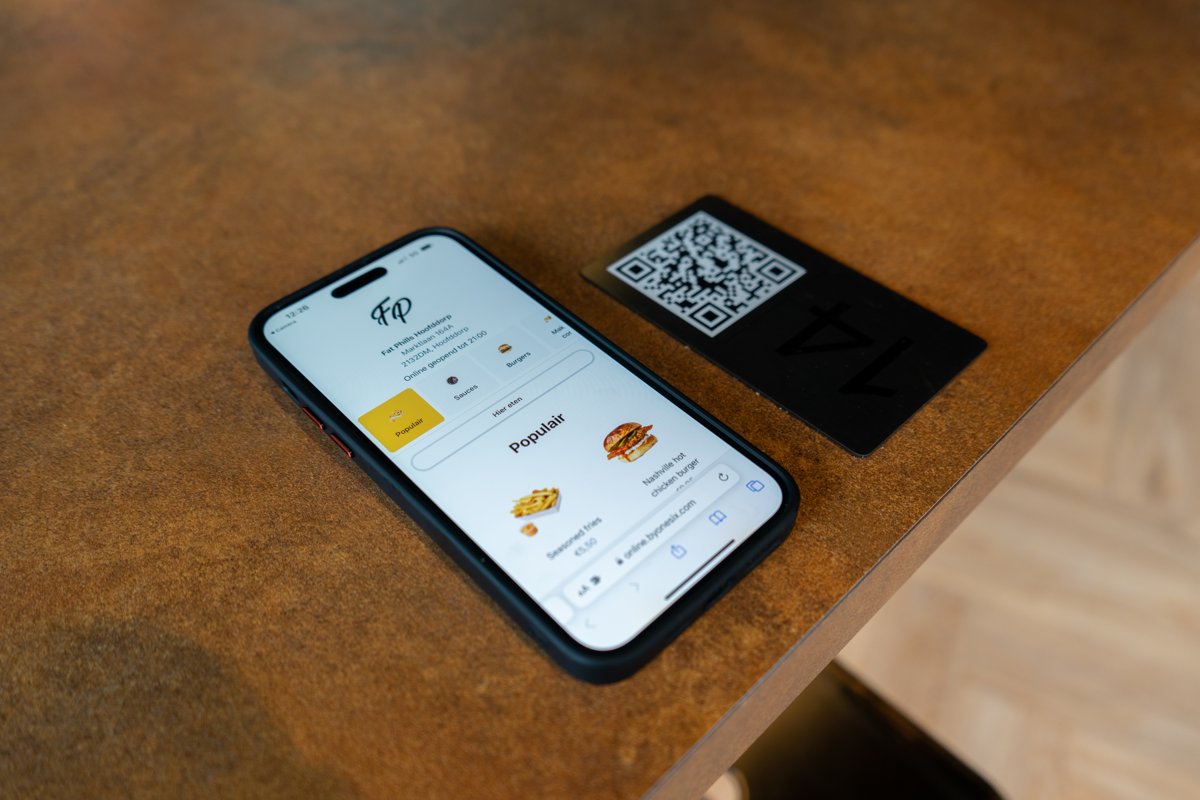
Take a look behind your counter. The roll of receipt paper, the stack of laminated menus, the daily specials card you had to reprint again last week. Paper is so normal in hospitality that you stop seeing it. Until you take it away. Sustainable hospitality usually doesn’t start with solar panels or a new fridge, it starts with digital ordering: less paper, less waste and less noise between your guest and your kitchen.
Once you start counting, it adds up faster than you’d think. In an average venue, paper leaves through at least five routes:
Each one is small. Together they’re a habit that comes back every single week, and costs you money and waste every single week.
Digital ordering isn’t one switch you flip. It’s a set of separate pieces you can pick up one at a time: your menu on your guest’s screen, your orders on a screen in the kitchen, and insight into what you throw away. Which ones you use is up to you. The paper disappears along the way, as a side effect of a process that runs smoother anyway.
With the Online Kiosk your guest scans a QR code or taps their phone against an NFC card, and there’s your menu. No app, on any screen. Those QR and NFC cards you either sort out yourself or order from us. Price change, something sold out, a new dish you want to add? You handle it in the Dashboard, without anything going to the printer.
Your paper menu doesn’t have to disappear for that. Plenty of venues keep a few copies to hand for guests who prefer them. The difference is that you no longer replace the whole stack every time something changes.
Dreading an evening at the laptop retyping your entire card? You don’t have to. You send us your current menu and we can set it up for you. After that you adjust products, prices and options yourself in the Dashboard. Rather have us make the changes? That works too.
The second stack sits in the kitchen. The Kitchen Display is a separate add-on you place alongside your Online Kiosk or your POS. Orders then come in digitally: no tickets, no unreadable slips falling off the rail. Save paper, cut waste and work towards a greener kitchen.
If you don’t take a Kitchen Display, printed kitchen tickets stay perfectly possible. And the two can live side by side, say a ticket behind the counter for takeaway and a screen in the kitchen. Going digital doesn’t mean the printer has to leave the building.
An order that gets misunderstood usually ends up in the bin. With digital ordering your guest taps in exactly what they want. That order is passed on digitally and clearly, including the options and extras they picked. No handwriting for someone to decipher, no misheard phone order.
Paper is the visible part. Food waste is the expensive part. The catch: digital ordering doesn’t measure that on its own. That’s what Inventory Management is for.
If you use that module, you log what you throw away: spoiled, dropped, over-prepped. The system works out straight away what it costs you. Seeing in black and white what goes in the bin is often enough to change something about it. Compare your counted stock with what the system expects, and you spot the gaps too.
Let’s be honest about it though: it stands or falls with how you set it up. Recipes that are right, counts you actually do. Do that, and you get numbers instead of a gut feeling.
Then there’s your order history. If a dish has barely sold for months, you know exactly which ingredients you’re buying for something that ends up in the bin anyway. That’s a choice you can make the moment you see it. For more on that, read our piece on making your menu more appealing and more profitable.
More and more guests pay attention to sustainability. A menu passed from hand to hand also feels dated pretty quickly, especially next to one that sits on their own phone, at their own pace, with photos.
And honestly: the conversation you get to have about it is a lot more fun than a sticker on the door. You just show people how it works.
Do I have to bin my paper menus completely? No. Plenty of venues combine the two: a few physical menus for guests who prefer them, digital ordering for everyone else. You just don’t have to replace the whole stack every time a price changes.
Do my guests need to install an app to order digitally? No. The Online Kiosk works through a QR code or NFC and opens straight in the browser, on any screen. Nothing has to come out of an app store.
My kitchen has worked with printed tickets for years. Is that a problem? It doesn’t have to be. If you want to keep printing tickets, you can. If you’d rather change, you can run the Kitchen Display as an add-on alongside your current way of working and let your team settle in. Want to talk through how that fits your kitchen? Get in touch and we’ll take a look with you.
You don’t have to change everything at once. Pick the one spot where paper piles up fastest, usually your menu or your kitchen tickets, and start there. The rest follows on its own once you notice how much calmer it runs.
More than 1000 hospitality operators went before you, from Subway to Bakker Bart, with a 4.7 on Trustpilot. Curious how digital ordering would work out in your venue? You test the Online Kiosk free for 30 days in your own venue. You pay no one-time software or setup fees and the licence is cancellable monthly. QR and NFC cards you sort out yourself or order from us; any material costs sit outside the licence. Support is there 24/7. Want to talk through the setup that fits you? Get in touch and we’ll figure it out together.

Wouter works as a Marketing Specialist at Onesix. This news site offers relevant articles for people working in or interested in hospitality, retail, and amusement parks.